Educational institutions play a pivotal role in shaping the character, values, and future of young minds. Recognising this responsibility, Swastika National Business School (SNBS), Mangaluru, has distinguished itself as a trailblazer in promoting a drug-free environment through sustained awareness initiatives, preventive strategies, and collaborative action.
Established with the vision of bridging the gap between theoretical knowledge and practical exposure through its unique philosophy of Earn While You Learn’, the institution has always encouraged students to make informed choices and remain flexible in their career aspirations. Alongside academic excellence, SNBS has consistently upheld the principles of discipline, ethical conduct, and what it proudly terms as ‘Zero Politics’ within the campus.
Taking this commitment a step further, the institution embarked on an ambitious mission to ensure a completely ‘Drug-Free Campus’, becoming one of the first educational institutions in the region to adopt concrete and preventive measures against substance abuse.
All this has been possible because of the farsightedness and boldness of the Chairman of SNBS, Dr Raghavendra Holla, who leaves nothing to chance and works relentlessly for the welfare and wellness of the student body and community.
A Bold and Uncompromising Stand
Long before drug awareness became a widely discussed issue in educational circles, Swastika National Business School recognised the dangers posed by substance abuse among young people. Rather than waiting for problems to surface, the institution chose the path of prevention.
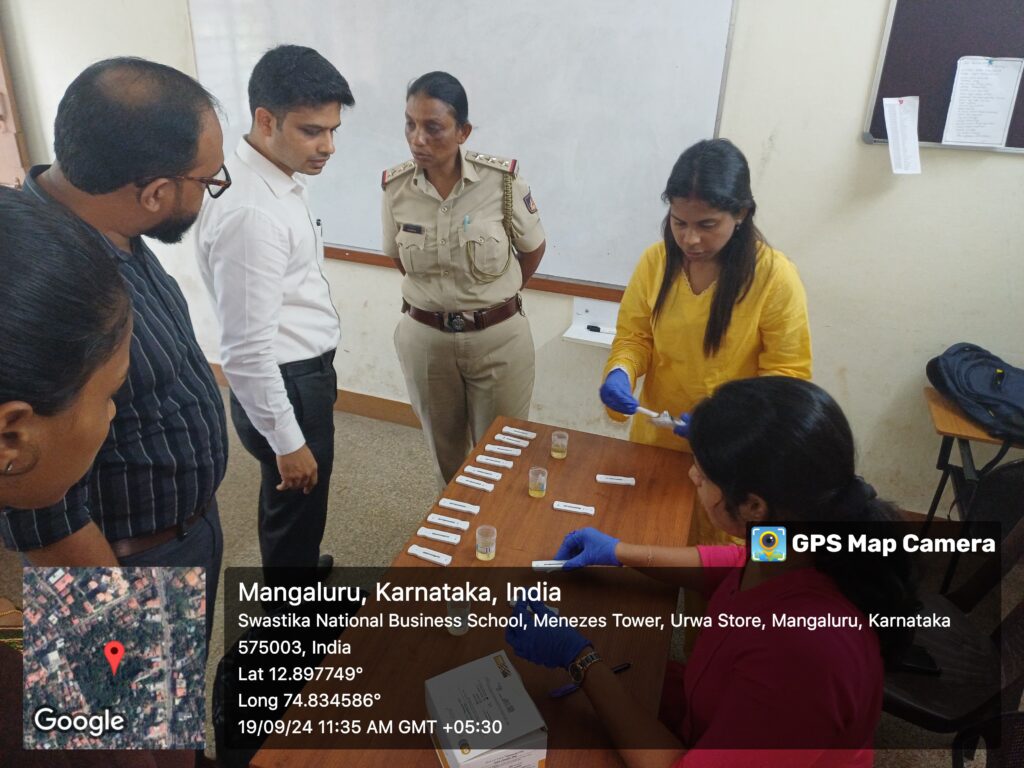
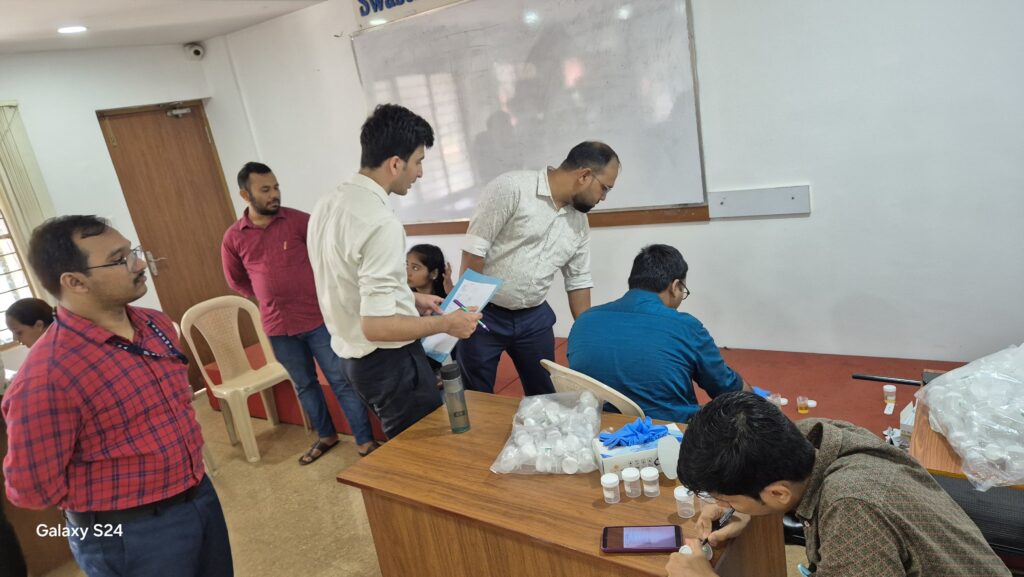
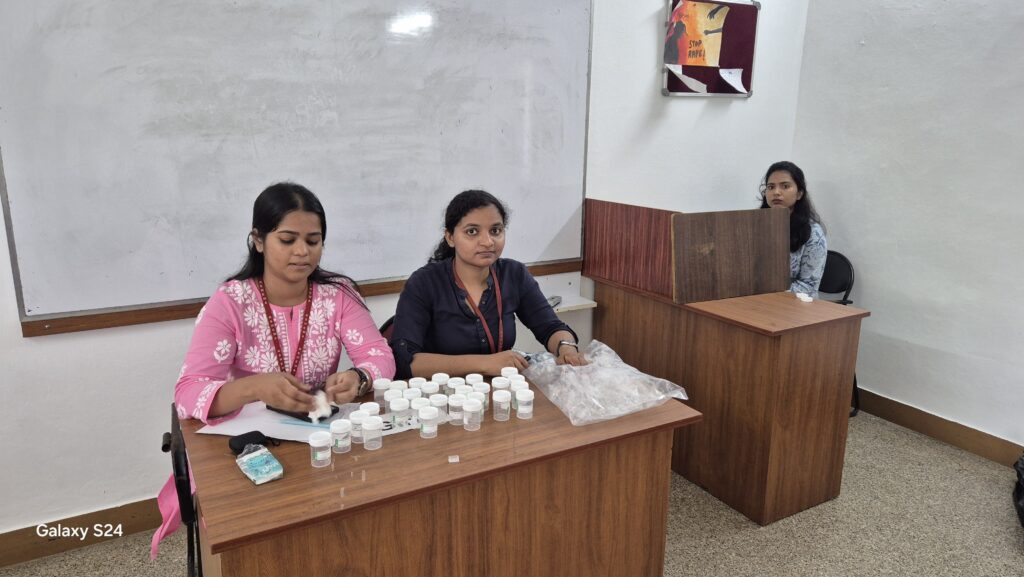
In a landmark initiative, the college introduced ‘Compulsory Drug Testing for Students’, an uncommon yet courageous step within the education sector. While the management expressed confidence in the values and conduct of its students, it believed that preventive mechanisms and periodic monitoring could help identify risks early and prevent the problem from taking root.
This initiative sent a powerful message—that the safety and well-being of students must remain non-negotiable and that educational institutions must not hesitate to adopt innovative approaches in protecting their communities.
Launch of the Drug-Free Campus Initiative
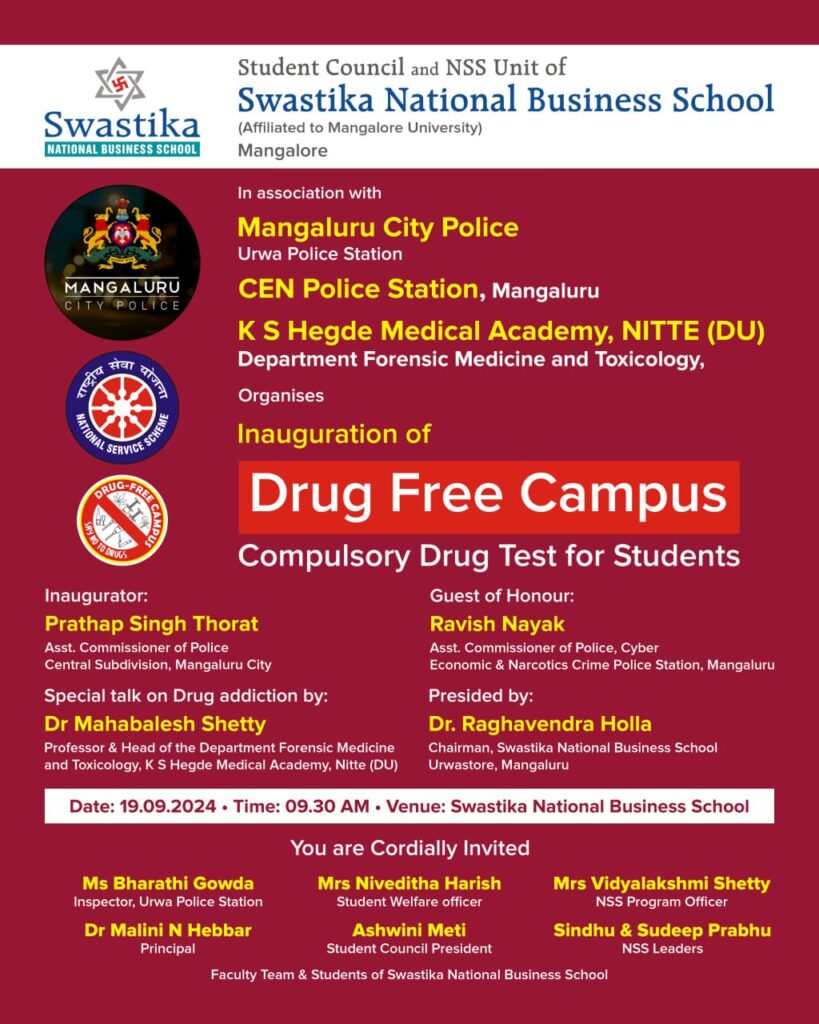
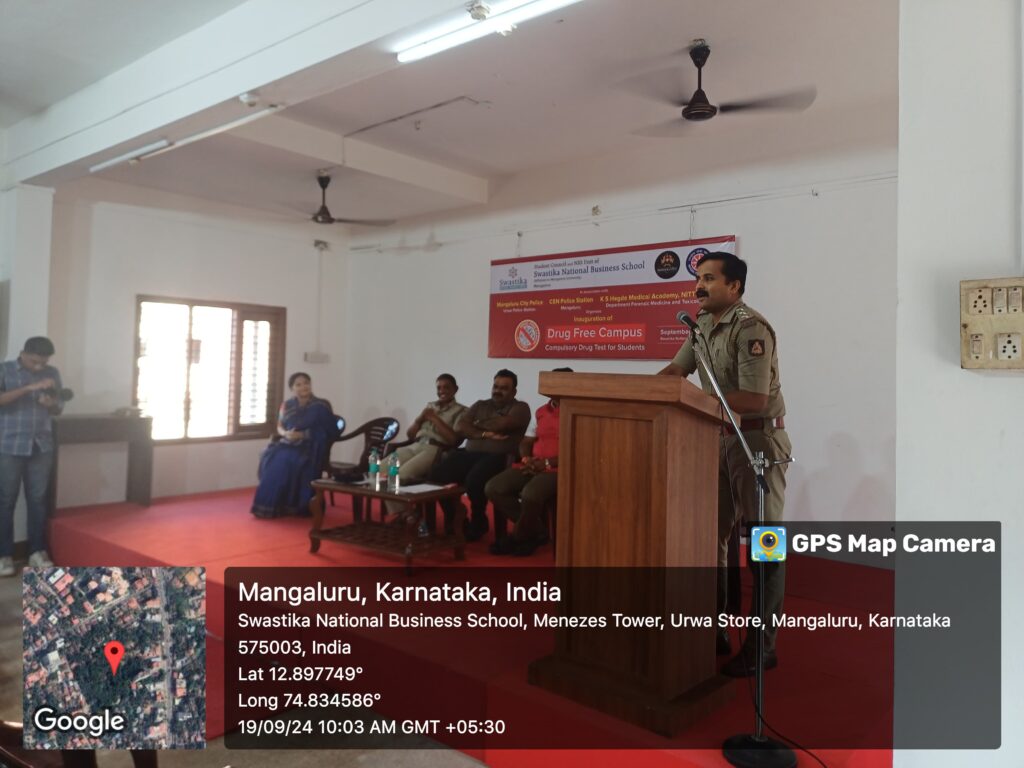
On September 19, 2024, Swastika National Business School officially inaugurated its Drug-Free Campus Initiative. The programme witnessed the participation of students and staff who collectively reaffirmed their commitment to creating a substance-free learning environment.
The event was graced by distinguished dignitaries including Mr. Prathap Singh Thorat, Assistant Commissioner of Police, Central Subdivision, Mangaluru City; Dr. Mahabalesh Shetty, Professor and Head of the Department of Forensic Medicine and Toxicology, KS Hegde Medical Academy; and Ms. Bharathi Gowda, Inspector, Urwa Police Station.
Addressing the gathering, the speakers highlighted the devastating physical, psychological, and social consequences of drug abuse. They stressed the importance of early intervention, awareness, and strict enforcement and lauded SNBS for its bold and proactive approach. The initiative was inaugurated by Sri Krishna J. Palemar, Former Minister, Government of Karnataka, who appreciated the institution’s leadership in addressing a critical social issue.
This milestone initiative established Swastika National Business School as a benchmark for educational institutions striving to provide safe, healthy, and focused academic environments.
Engaging Students Through Dialogue
Swastika National Business School understands that awareness becomes meaningful only when students actively engage with the issue.
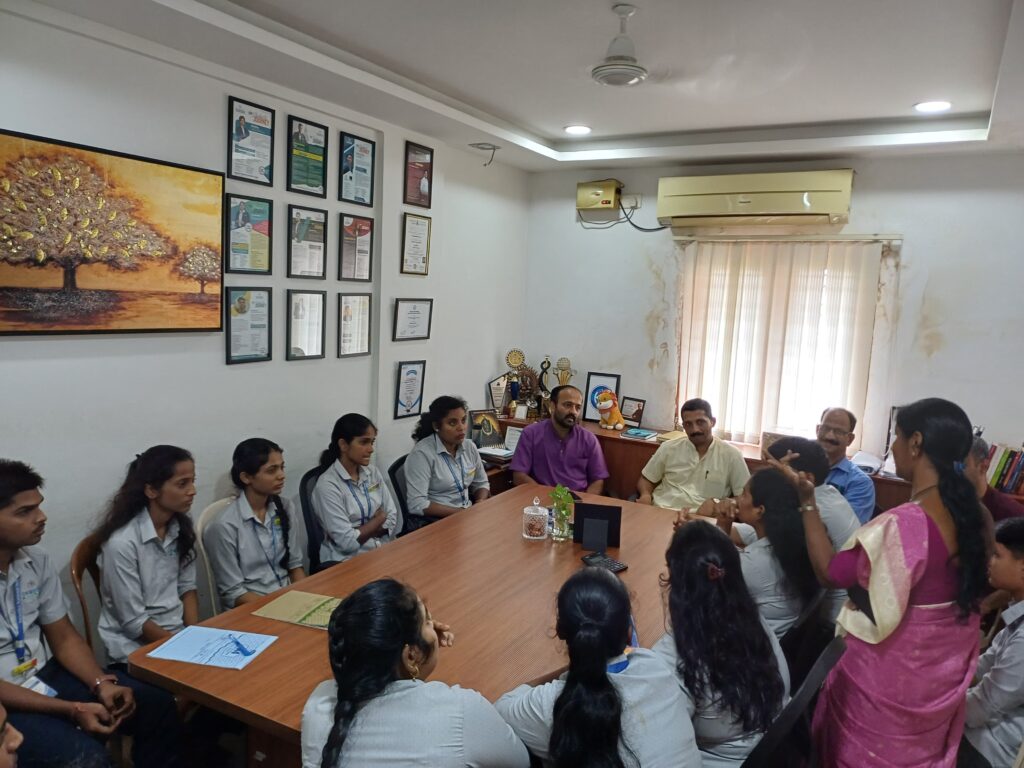
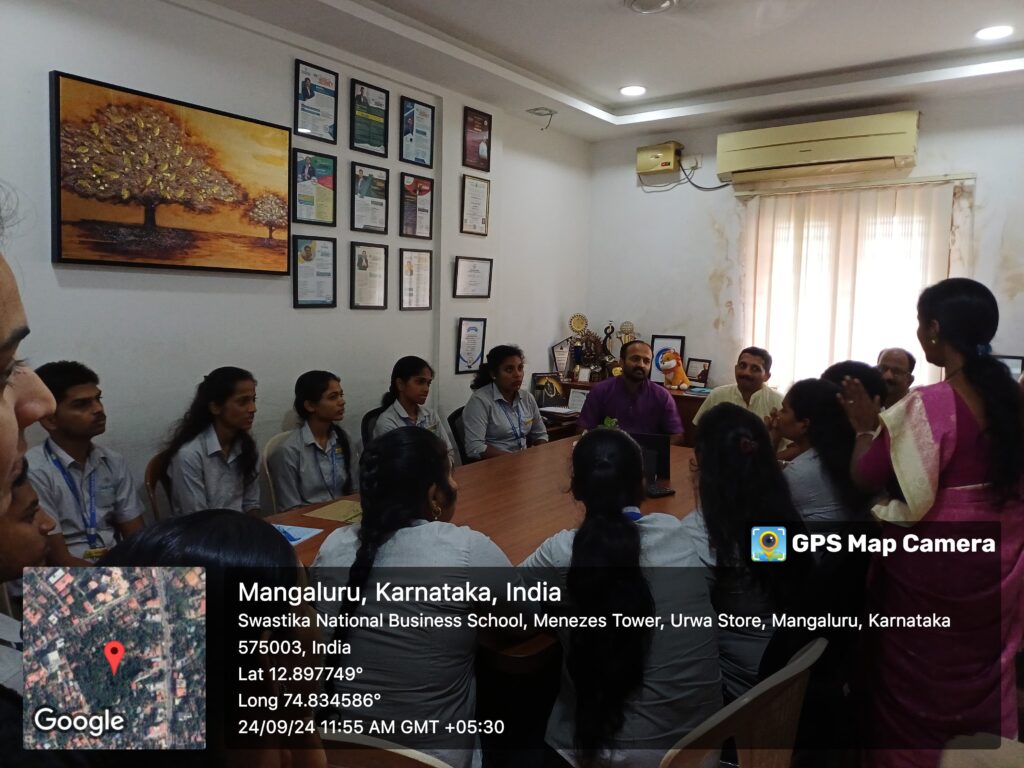
On 24 September 2024, members of the Student Senate and staff participated in an interactive session with representatives of the Rashtriya Swayamsevak Sangh (RSS). The discussion focused on the rising prevalence of substance abuse among youth and the role of personal discipline and community responsibility in preventing addiction.
The session encouraged students to ask questions, reflect critically on societal influences, and understand that resisting drugs is not merely an individual choice but a collective social responsibility.
Awareness Through Collaboration
Recognising that combating drug abuse requires collective effort, SNBS actively collaborated with law enforcement agencies, healthcare professionals, and community organisations.
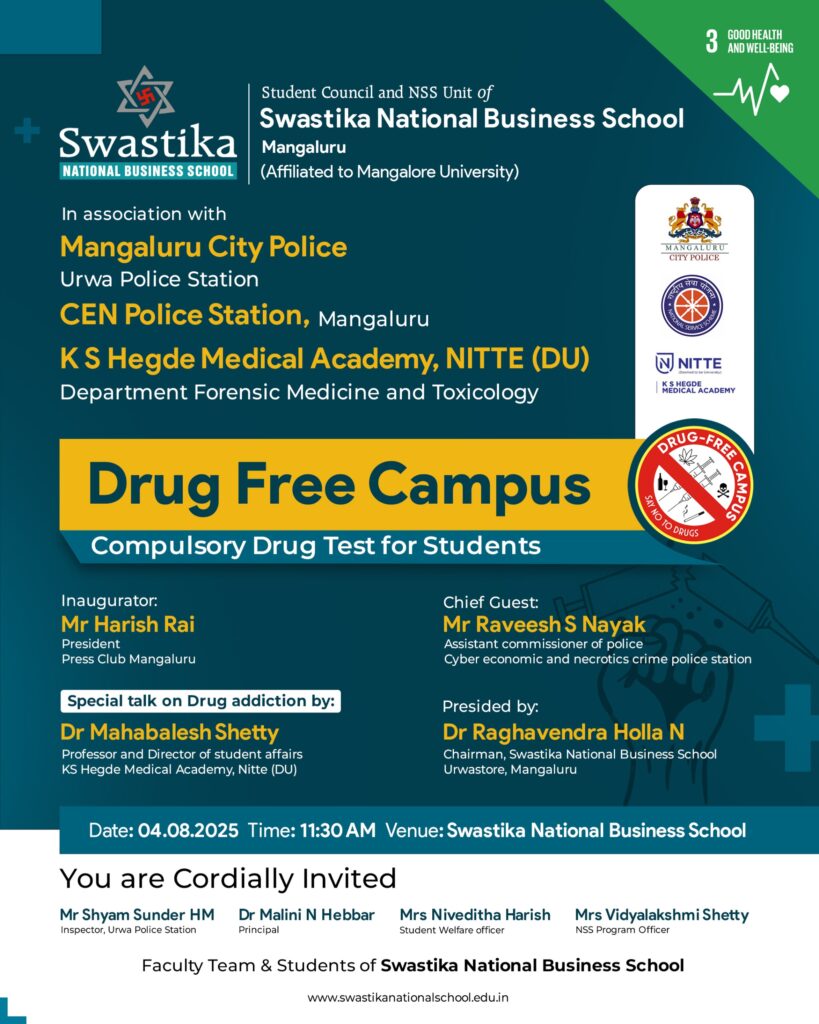
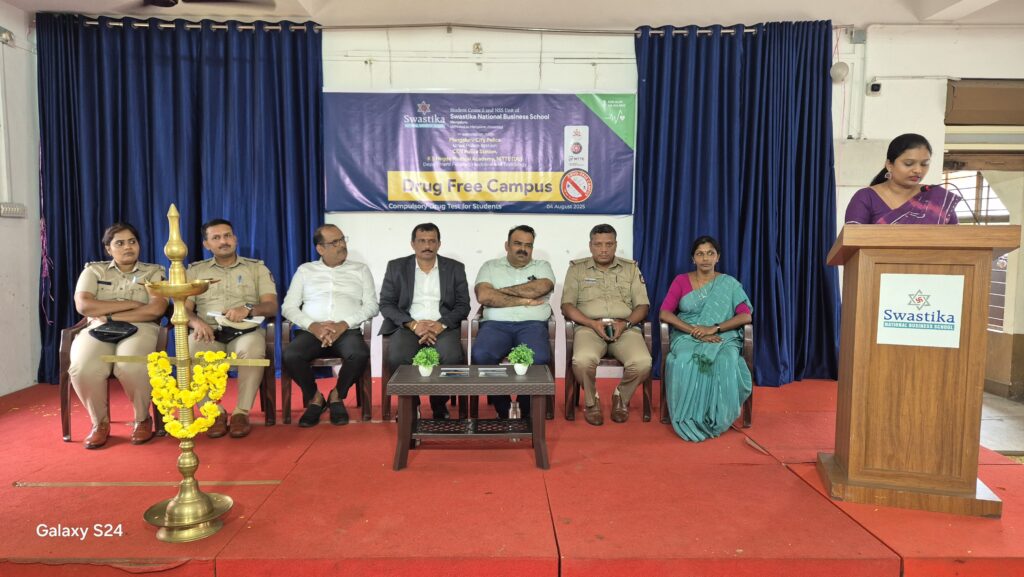
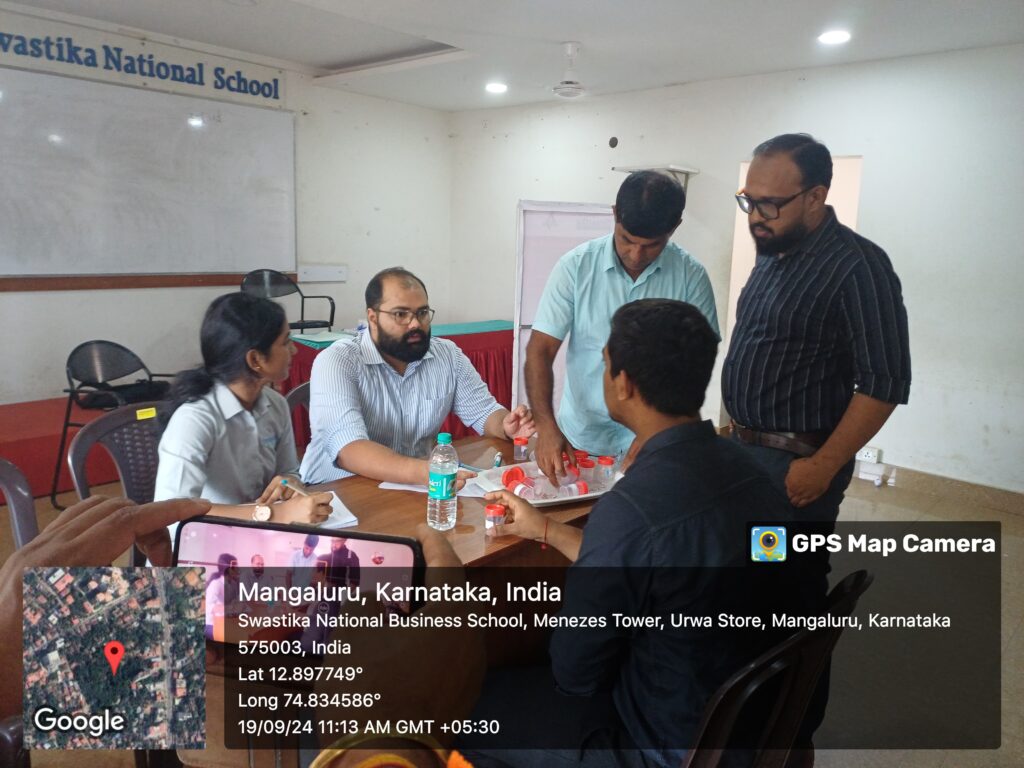
On 4 August 2025, in association with the Mangaluru City Police (Urwa Police Station), the Cyber Economic and Narcotics Crime Police Station, and KS Hegde Medical Academy, NITTE (Deemed to be University), the institution organised a comprehensive ‘Drug-Free Campus Awareness and Compulsory Drug-Testing Programme.’
The programme was inaugurated by Mr. Harish Rai, President of the Press Club, Mangaluru. The Chief Guest, Mr. Raveesh S. Nayak, Assistant Commissioner of Police, Cyber Economic and Narcotics Crime Police Station, sensitised students to the increasing menace of drug abuse and emphasised the importance of vigilance and responsible behaviour.
A special educational session by Dr. Mahabalesh Shetty provided scientific insights into addiction, explaining the physical, emotional, and social consequences of substance abuse while equipping students with preventive strategies and informed decision-making skills.
Presiding over the programme, Dr. Raghavendra Holla N., Chairman of SNBS, reiterated that educational institutions bear the responsibility of nurturing safe, disciplined, and healthy campus environments. The active participation of Dr. Malini N. Hebbar, Principal; Mr. Shyam Sunder H. M., Inspector, Urwa Police Station; Mrs. Niveditha Harish, Student Welfare Officer; and Mrs. Vidyalakshmi Shetty, NSS Programme Officer, further strengthened the initiative.
Extending the Movement Beyond Campus
True leadership lies in inspiring others, and SNBS has consistently expanded its anti-drug initiatives beyond institutional boundaries.
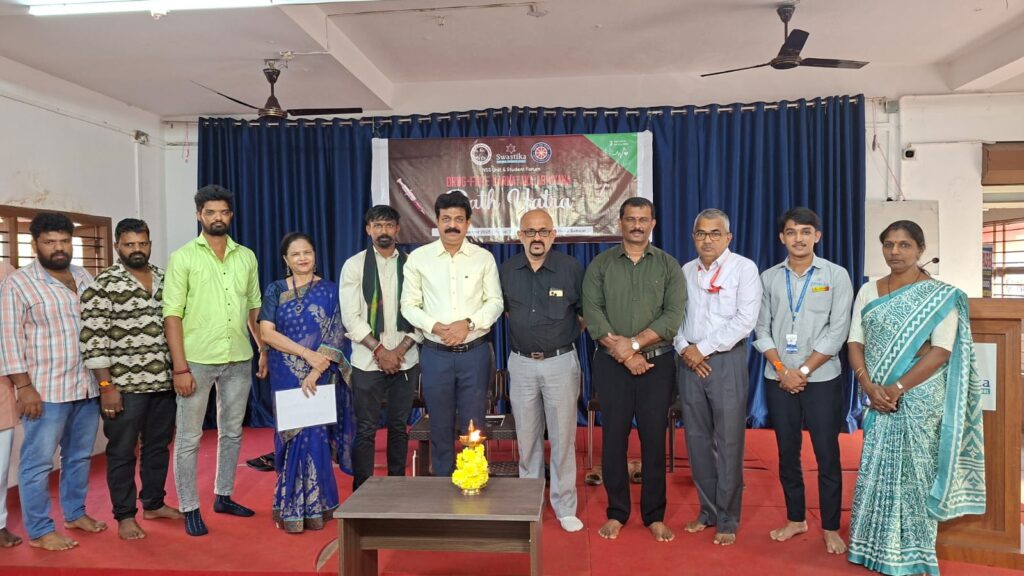
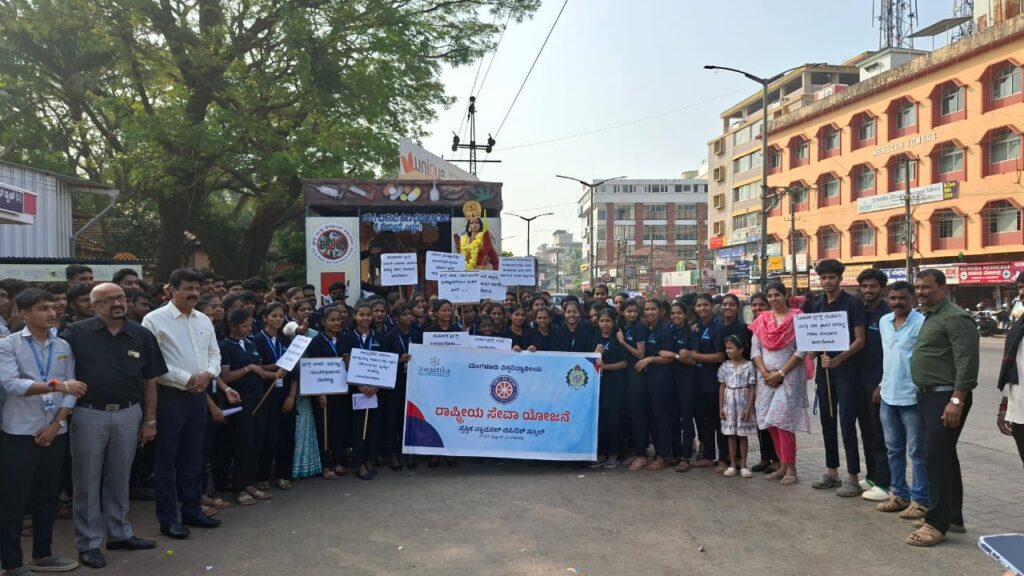
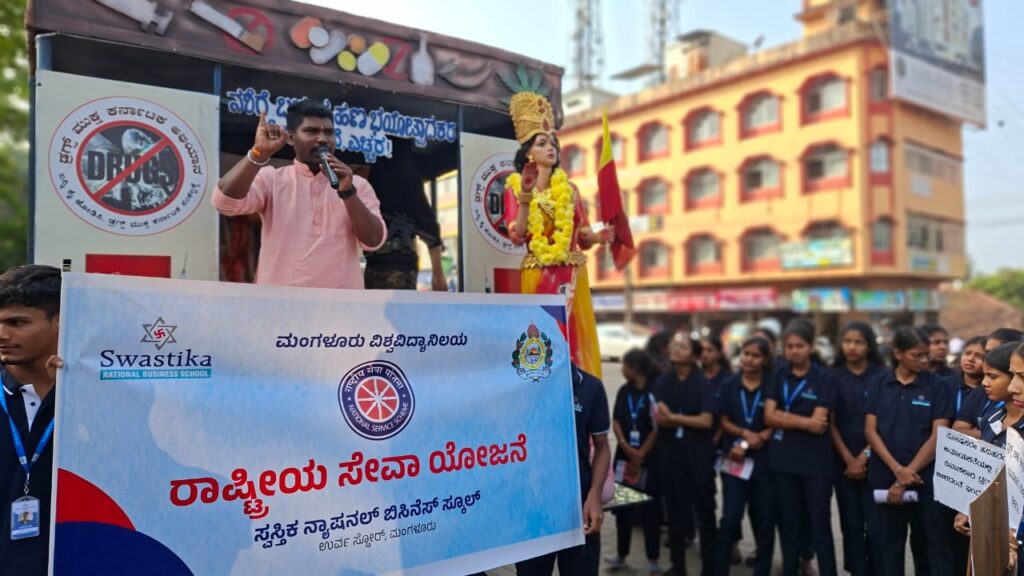
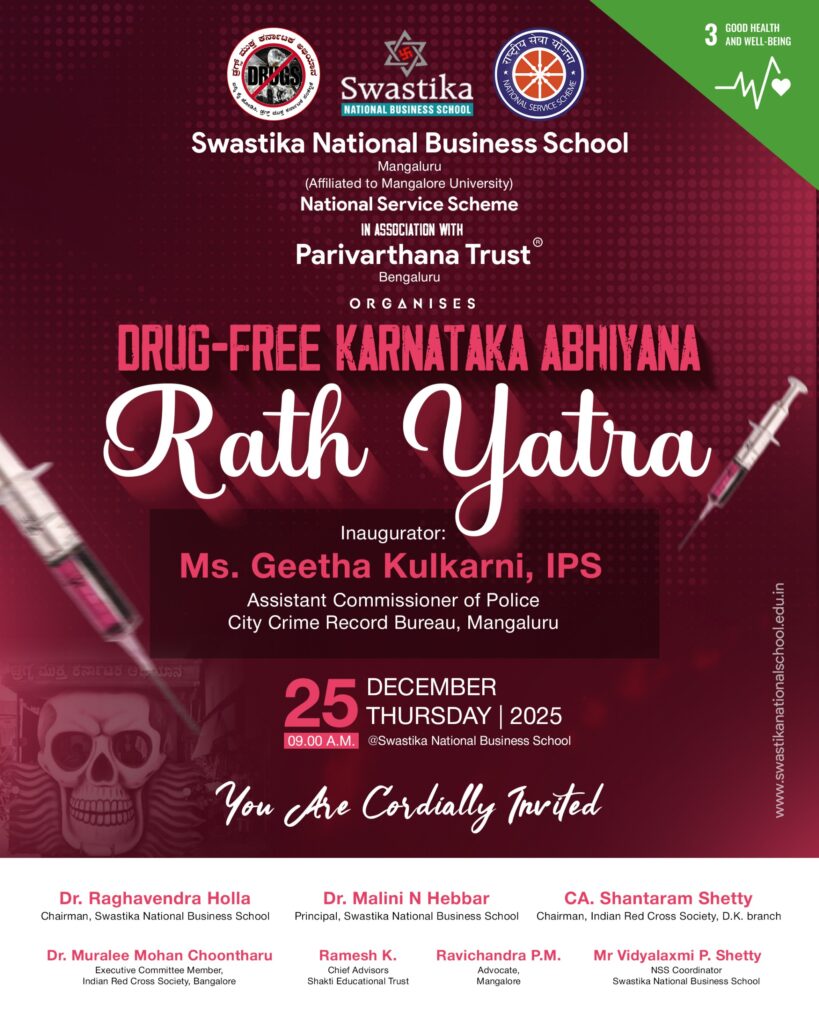
On 25 December 2025, through its NSS Unit and Student Forum, in collaboration with Parivarthana Trust, Bengaluru, the institution organised the ‘Drug-Free Karnataka Abhiyana Rath Yatra.’
The programme was inaugurated by CA Shantaram Shetty, Chairman of the Indian Red Cross Society, Dakshina Kannada Branch. Dr. Murlee Mohan Choonthoor, Executive Committee Member of the Indian Red Cross Society, Bengaluru, addressed students on the severe social, psychological, and health consequences of addiction and encouraged them to become ambassadors of awareness.
Presiding over the programme, Dr. Raghavendra Holla highlighted the transformative role educational institutions play in nurturing socially responsible citizens. Students symbolically offered flowers near the Drug-Free Karnataka Rath and Bharat Mata as an expression of their commitment to building an addiction-free society.
A pledge against drug abuse was administered by Dr. Malini N. Hebbar, Principal, inspiring students to adopt healthy lifestyles and spread awareness within their communities.
Leading by Example
The initiatives undertaken by Swastika National Business School demonstrate that educational institutions must go beyond imparting academic knowledge. They must actively shape attitudes, influence behaviour, and create environments where young people can thrive safely.
Through compulsory preventive measures, strategic collaborations with police and healthcare institutions, awareness programmes, student engagement, community outreach, and unwavering administrative support, SNBS has emerged as a pioneer in the fight against drug abuse.
Its journey reflects courage, foresight, and a deep commitment to student welfare. More importantly, it serves as an inspiring model for other institutions to emulate.
As the nation strives towards achieving Sustainable Development Goal 3—Good Health and Well-Being—Swastika National Business School stands as a shining example of how educational institutions can lead social transformation.
Its message is clear and compelling: a drug-free campus is not merely an aspiration; it is a responsibility. Through collective action, vigilance, and value-based education, a healthier, safer, and more responsible generation can indeed be nurtured.